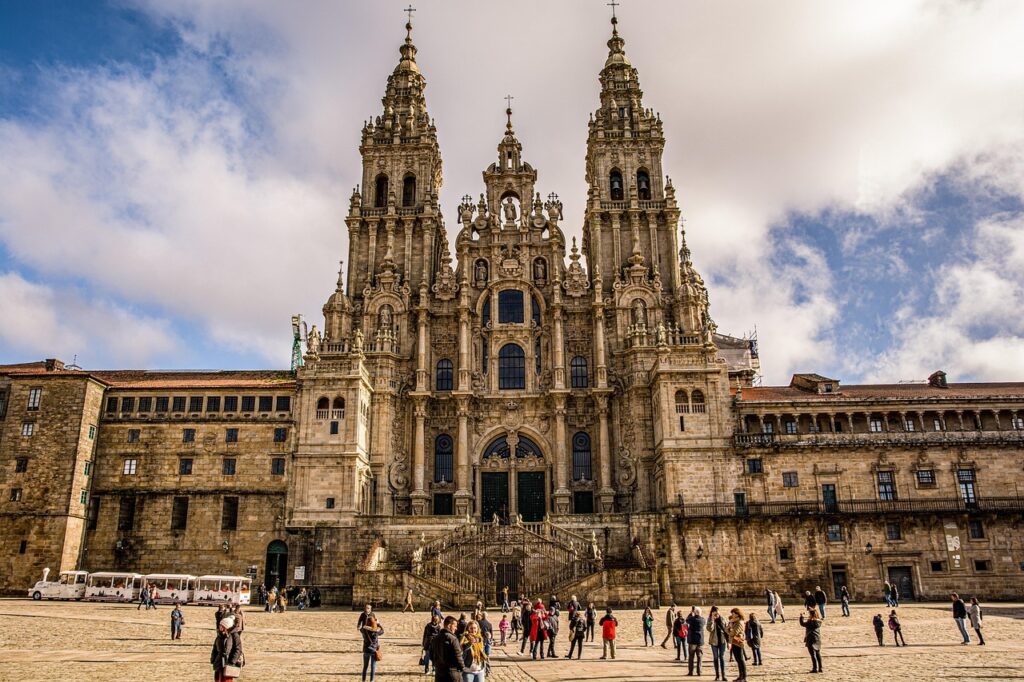
The Way of St. James’, most commonly known as the Camino de Santiago, has captivated adventurers for over a thousand years. It allows you to experience Spain and other European countries through a completely different lens, often bringing meaningful rewards. But, like any journey, it has its own disadvantages too. Here are the pros and cons you should know about before your Camino.
The rewarding side of the Camino
Walking the Camino allows you to explore Spain in its most authentic form, far removed from the typical tourist paths. Instead of just visiting popular attractions, you are traversing through ancient forests, rolling countryside, medieval villages and small communities. Pilgrims experience a cultural immersion that standard holidays rarely provide, including local customs preserved over centuries.
Moreover, the human connections made along the Camino is one of its greatest treasures. The sense of community here is incredible, as shared experiences and common challenges seamlessly create bonds between strangers. If you’re doing one of the most popular routes, such as Camino Francés from Sarria, you will cross paths with people from all walks of life. Believe it or not, these trails are where hundreds of lifelong friendships were born!
What’s more, the very nature of this trip involves minimal daily spendings, with limited transportation costs or expenses on tourist activities (these are usually down to you). Food and drink in local cafes is not only delicious, but generally affordable too. And, if you want to be even more budget-friendly, you can bring shop-bought snacks with you.
Limitations and challenges
One of the major limitations of the Camino is, of course, how slow paced it is. While some people see it as an advantage, others prefer to fit as many attractions in a single day as possible. If you worry about missing out on other destinations outside of your route, you could plan some extra holiday time in Spain before or after your pilgrimage.
Furthermore, the physical demands of this experience cannot be understated. The Camino de Santiago involves daily walking of 20-30-kilometer distances, for a week or longer. Depending on your chosen route, you may have to tackle challenging terrain, with steep inclines. Blisters and fatigue are common companions during the Camino, whilst unpredictable weather (storms or heat waves) can put a downer on motivation. You must be realistic about this journey, preparing for it to be difficult at times. The rewards, however, are worth it in the end.
Lastly, with Camino’s popularity surging each year, popular routes like Camino Francés are getting busier, particularly during the peak walking season (late spring and summer). What was once a peaceful, quiet journey, can now feel a lot less private. If this is something you wish to avoid, simply plan your holiday during the quieter period (shoulder seasons).